Litter Clearance Docklands
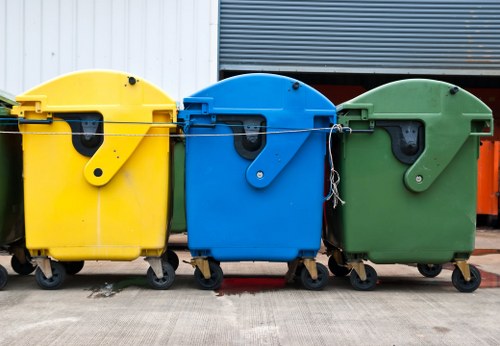
A row of three large wheeled rubbish bins positioned side by side on a concrete pavement in an industrial or commercial area. The bins are made of sturdy plastic with a textured finish and feature a lid with a handle. The bin on the left is bright yellow, the middle bin is vivid blue, and the right bin is forest green. Each bin has a locking mechanism on the front, and the yellow and blue bins are secured with black cable ties, while the green bin appears to have a loose tie or strap hanging from its handle. Behind the bins, there is a background of metallic siding panels, one white and one grey, suggesting a depot or storage facility environment. The lighting suggests natural daylight, casting soft shadows on the ground. This image relates to rubbish and waste management services, such as those provided by Lotter London in the Docklands area, emphasizing the importance of organised waste disposal solutions in urban environments.

The Docklands area is a bustling hub of activity, known for its vibrant communities and stunning waterfront views. However, with the high foot traffic and numerous events, litter accumulation can become a significant issue. Effective litter clearance Docklands ensures that the area remains clean, safe, and welcoming for both residents and visitors.

Litter not only detracts from the natural beauty of Docklands but also poses environmental threats. Improper waste disposal can harm local wildlife, pollute water sources, and create unsanitary conditions. Therefore, implementing robust litter clearance strategies is essential for maintaining the ecological balance and the overall appeal of the area.

Local councils and community groups play a pivotal role in managing litter. From organizing regular clean-up drives to enforcing anti-littering laws, these entities work tirelessly to keep Docklands pristine. Additionally, public awareness campaigns educate residents and visitors about the importance of responsible waste disposal.

A male waste management worker wearing a white safety helmet and an orange high-visibility vest with grey sleeves is lifting a large black plastic bag filled with rubbish above his head, preparing to dispose of or transport it. He is standing outdoors in an open area with a cloudy sky and blurred natural landscape in the background. In front of him, there are piles of various debris, including what appears to be a mix of fabric, paper, and construction materials, suggesting a cleanup or rubbish clearance scene typical of services provided by companies like Lotter London in the Docklands area. The textured surface of the debris contrasts with the smooth, reflective plastic of the bag, highlighting the nature of waste collection and rubbish removal. The workplace environment indicates an active operational setting related to waste management and rubbish clearance, with the worker focused on the task at hand, illustrating the physically demanding aspect of rubbish removal services offered in the Docklands region. This detailed scene emphasizes the importance of efficient waste disposal for maintaining local cleanliness in the area, aligning with the comprehensive strategies discussed on the page about keeping Docklands tidy and the kind of rubbish removal services advertised by litter.london.

Understanding Litter Clearance Docklands

Litter clearance in Docklands involves the systematic removal of waste from public spaces. This process includes the collection, sorting, and disposal of various types of litter, ranging from plastic bottles and packaging to cigarette butts and food scraps.

The goal is to minimize the environmental impact of litter and maintain the area's aesthetic appeal. Effective litter clearance strategies are tailored to the unique characteristics of Docklands, taking into account the high density of businesses, residential areas, and recreational spots.

Technology also plays a role in modern litter clearance efforts. Innovations such as smart bins, which notify waste management services when they are full, and drones used for monitoring litter hotspots, enhance the efficiency of cleanup operations.
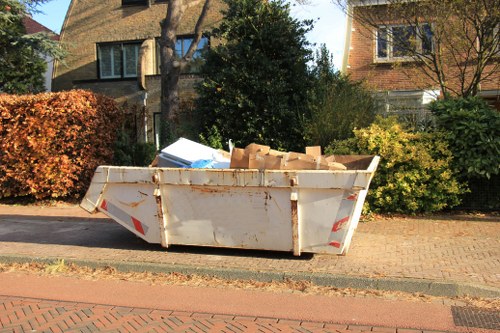
A large, rectangular metal skip filled with various waste materials, positioned on a paved residential street frontage in Docklands. The skip has a white finish with visible rust and dirt marks along its surface. Inside, there are several cardboard boxes and loose packaging, some partially collapsed. The skip is placed directly on the brick-paved sidewalk, with a curb separating it from the tarmac road. In the background, there are residential houses with brick and stone facades, surrounded by greenery including bushes, trees, and shrubs exhibiting autumnal colors. The scene is illuminated by natural daylight, with shadows cast by nearby trees and structures, indicating a clear day. The image exemplifies typical rubbish removal in London, with Lotter London providing residential waste clearance services for properties in the Docklands area, as suggested by the contextual clues in the setting and surroundings.

The Importance of Timely Litter Clearance

Timely litter clearance prevents the accumulation of waste that can lead to larger environmental issues. Regular maintenance ensures that public areas remain clean, reducing the risk of attractants for pests and the degradation of natural habitats.

Moreover, maintaining cleanliness in Docklands has economic benefits. A clean and attractive area appeals to tourists and potential investors, contributing to the economic growth of the region.

Community pride is another significant factor. When residents see that their environment is well-maintained, it fosters a sense of ownership and responsibility towards keeping the area clean.

A close-up view of a person’s hand holding an empty transparent plastic bottle, with visible ridges along its body and a narrow neck, over a blue recycling bin filled with various discarded bottles and packaging. In the background, another individual wearing a bright green shirt and a black watch on their wrist is seen, holding a green plastic bottle, standing on a grassy outdoor area near Docklands. The scene captures the process of sorting and collecting recyclable plastic waste as part of rubbish removal efforts by Lotter London, with natural daylight illuminating the scene and highlighting the different shapes, colors, and textures of the waste materials. The environment appears clean and organized, emphasizing environmental responsibility and waste management practices in the local community.

Effective Methods for Litter Clearance

Regular Clean-Up Operations

Organizing regular clean-up events ensures that litter does not accumulate. These operations are often conducted by local authorities in collaboration with community volunteers.

Scheduled clean-up sessions target high-traffic areas such as parks, commercial zones, and waterfronts, where litter is more likely to accumulate.

Providing necessary tools like gloves, bags, and pickers enhances the efficiency of these clean-up efforts.

Public Waste Bins and Recycling Stations

Strategically placing waste bins and recycling stations throughout Docklands encourages proper waste disposal. Clear signage helps guide residents and visitors on how to dispose of different types of waste.

Accessible bins reduce the likelihood of littering, as people are more inclined to dispose of their waste when convenient facilities are available.

Inspecting and maintaining these bins regularly prevents overflow and ensures they are effective in managing waste.

A large outdoor commercial rubbish skip positioned on a paved surface adjacent to a curb, with a blue lid partially open revealing the interior. The container is made of sturdy, corrugated metal painted white, featuring red and white chevron reflective markings on the sides for visibility. The skip is situated on the edge of a parking area near a grassy verge with some weeds and grass growing along the pavement edge. In the background, there is an open landscape with some distant buildings and greenery under a clear sky, indicating a typical urban or dockside environment in London. The image exemplifies waste collection facilities used by Lotter London for efficient rubbish clearance services, with the skip prepared for waste disposal or removal, typical in the Docklands area. The scene is evenly lit with natural daylight, emphasizing the functional appearance of the waste management equipment in an outdoor setting connected to local rubbish removal activities.

Enforcement of Anti-Littering Laws

Implementing and enforcing anti-littering regulations serves as a deterrent against irresponsible waste disposal.

Fines and penalties for littering can discourage individuals from discarding waste improperly.

Public awareness campaigns complement these laws by educating the community about the consequences of littering.

Community Engagement and Education

Engaging the community through educational programs fosters a culture of cleanliness and responsibility.

Schools, community centers, and local organizations can host workshops and events that emphasize the importance of maintaining a litter-free environment.

Empowering residents with knowledge encourages them to take proactive steps in preventing litter accumulation.

A row of three large wheeled rubbish bins positioned side by side on a concrete pavement in an industrial or commercial area. The bins are made of sturdy plastic with a textured finish and feature a lid with a handle. The bin on the left is bright yellow, the middle bin is vivid blue, and the right bin is forest green. Each bin has a locking mechanism on the front, and the yellow and blue bins are secured with black cable ties, while the green bin appears to have a loose tie or strap hanging from its handle. Behind the bins, there is a background of metallic siding panels, one white and one grey, suggesting a depot or storage facility environment. The lighting suggests natural daylight, casting soft shadows on the ground. This image relates to rubbish and waste management services, such as those provided by Lotter London in the Docklands area, emphasizing the importance of organised waste disposal solutions in urban environments.

Challenges in Litter Clearance Docklands

Despite concerted efforts, litter clearance in Docklands faces several challenges.

High population density and constant influx of visitors increase the volume of waste generated daily.

Limited resources and funding can restrict the frequency and scope of clean-up operations.

A male waste management worker wearing a white safety helmet and an orange high-visibility vest with grey sleeves is lifting a large black plastic bag filled with rubbish above his head, preparing to dispose of or transport it. He is standing outdoors in an open area with a cloudy sky and blurred natural landscape in the background. In front of him, there are piles of various debris, including what appears to be a mix of fabric, paper, and construction materials, suggesting a cleanup or rubbish clearance scene typical of services provided by companies like Lotter London in the Docklands area. The textured surface of the debris contrasts with the smooth, reflective plastic of the bag, highlighting the nature of waste collection and rubbish removal. The workplace environment indicates an active operational setting related to waste management and rubbish clearance, with the worker focused on the task at hand, illustrating the physically demanding aspect of rubbish removal services offered in the Docklands region. This detailed scene emphasizes the importance of efficient waste disposal for maintaining local cleanliness in the area, aligning with the comprehensive strategies discussed on the page about keeping Docklands tidy and the kind of rubbish removal services advertised by litter.london.

Addressing Environmental Impact

Litter can have severe environmental consequences, including pollution of waterways and harm to wildlife.

Removing waste promptly reduces these negative impacts and helps preserve the natural beauty of Docklands.

Collaborating with environmental organizations can enhance the effectiveness of litter clearance initiatives.

Implementing Sustainable Practices

Adopting sustainable waste management practices is crucial for long-term success.

Encouraging recycling, composting, and the use of biodegradable materials can significantly reduce the amount of litter.

Promoting a zero-waste culture involves community participation and support from local businesses.

A large, rectangular metal skip filled with various waste materials, positioned on a paved residential street frontage in Docklands. The skip has a white finish with visible rust and dirt marks along its surface. Inside, there are several cardboard boxes and loose packaging, some partially collapsed. The skip is placed directly on the brick-paved sidewalk, with a curb separating it from the tarmac road. In the background, there are residential houses with brick and stone facades, surrounded by greenery including bushes, trees, and shrubs exhibiting autumnal colors. The scene is illuminated by natural daylight, with shadows cast by nearby trees and structures, indicating a clear day. The image exemplifies typical rubbish removal in London, with Lotter London providing residential waste clearance services for properties in the Docklands area, as suggested by the contextual clues in the setting and surroundings.

Local Initiatives and Success Stories

Various local initiatives have made significant strides in reducing litter in Docklands.

For example, the annual Docklands Clean-Up Day mobilizes thousands of volunteers to tackle litter in key areas.

Success stories, such as the transformation of previously littered parks into pristine recreational spaces, highlight the impact of dedicated efforts.

A close-up view of a person’s hand holding an empty transparent plastic bottle, with visible ridges along its body and a narrow neck, over a blue recycling bin filled with various discarded bottles and packaging. In the background, another individual wearing a bright green shirt and a black watch on their wrist is seen, holding a green plastic bottle, standing on a grassy outdoor area near Docklands. The scene captures the process of sorting and collecting recyclable plastic waste as part of rubbish removal efforts by Lotter London, with natural daylight illuminating the scene and highlighting the different shapes, colors, and textures of the waste materials. The environment appears clean and organized, emphasizing environmental responsibility and waste management practices in the local community.

Innovative Solutions

Innovative solutions like biodegradable waste bags and community recycling programs contribute to effective litter management.

Technology-driven approaches, including mobile apps that report litter hotspots, empower residents to participate actively in keeping Docklands clean.

Collaborations between the public and private sectors facilitate the deployment of advanced waste management systems.

Volunteer Programs

Volunteer programs engage community members in litter clearance activities, fostering a sense of camaraderie and shared responsibility.

These programs provide opportunities for individuals to contribute positively to their environment.

Recognition and incentives for volunteers can boost participation and sustain long-term commitment.

A large outdoor commercial rubbish skip positioned on a paved surface adjacent to a curb, with a blue lid partially open revealing the interior. The container is made of sturdy, corrugated metal painted white, featuring red and white chevron reflective markings on the sides for visibility. The skip is situated on the edge of a parking area near a grassy verge with some weeds and grass growing along the pavement edge. In the background, there is an open landscape with some distant buildings and greenery under a clear sky, indicating a typical urban or dockside environment in London. The image exemplifies waste collection facilities used by Lotter London for efficient rubbish clearance services, with the skip prepared for waste disposal or removal, typical in the Docklands area. The scene is evenly lit with natural daylight, emphasizing the functional appearance of the waste management equipment in an outdoor setting connected to local rubbish removal activities.

Future of Litter Clearance in Docklands

The future of litter clearance in Docklands lies in continuous improvement and adaptation.

Integrating advanced technologies and sustainable practices will enhance the efficiency and effectiveness of waste management.

Long-term planning and investment are essential for maintaining a clean and vibrant Docklands.

A row of three large wheeled rubbish bins positioned side by side on a concrete pavement in an industrial or commercial area. The bins are made of sturdy plastic with a textured finish and feature a lid with a handle. The bin on the left is bright yellow, the middle bin is vivid blue, and the right bin is forest green. Each bin has a locking mechanism on the front, and the yellow and blue bins are secured with black cable ties, while the green bin appears to have a loose tie or strap hanging from its handle. Behind the bins, there is a background of metallic siding panels, one white and one grey, suggesting a depot or storage facility environment. The lighting suggests natural daylight, casting soft shadows on the ground. This image relates to rubbish and waste management services, such as those provided by Lotter London in the Docklands area, emphasizing the importance of organised waste disposal solutions in urban environments.

Community Involvement

Ongoing community involvement is crucial for the sustained success of litter clearance efforts.

Encouraging local businesses and residents to take ownership of their environment fosters a culture of cleanliness.

Regular feedback and collaboration between stakeholders ensure that strategies remain relevant and effective.

Adapting to Urban Development

As Docklands continues to develop, litter clearance strategies must adapt to changing landscapes.

New infrastructure projects and increased commercial activities require scalable and flexible waste management solutions.

Urban planning should incorporate waste management considerations to prevent future litter issues.

A male waste management worker wearing a white safety helmet and an orange high-visibility vest with grey sleeves is lifting a large black plastic bag filled with rubbish above his head, preparing to dispose of or transport it. He is standing outdoors in an open area with a cloudy sky and blurred natural landscape in the background. In front of him, there are piles of various debris, including what appears to be a mix of fabric, paper, and construction materials, suggesting a cleanup or rubbish clearance scene typical of services provided by companies like Lotter London in the Docklands area. The textured surface of the debris contrasts with the smooth, reflective plastic of the bag, highlighting the nature of waste collection and rubbish removal. The workplace environment indicates an active operational setting related to waste management and rubbish clearance, with the worker focused on the task at hand, illustrating the physically demanding aspect of rubbish removal services offered in the Docklands region. This detailed scene emphasizes the importance of efficient waste disposal for maintaining local cleanliness in the area, aligning with the comprehensive strategies discussed on the page about keeping Docklands tidy and the kind of rubbish removal services advertised by litter.london.

Nearby Areas and Their Litter Clearance Efforts

  • Canary Wharf: Known for its financial district, Canary Wharf maintains strict litter policies and frequent clean-ups to support its upscale environment.
  • Greenwich: With its rich historical sites, Greenwich emphasizes heritage preservation through proactive litter management.
  • Stratford: Hosting numerous events, Stratford utilizes temporary litter collection systems during high-traffic periods.
  • Wapping: This riverside area focuses on eco-friendly litter clearance methods to protect its aquatic ecosystem.
  • Lewisham: Lewisham collaborates with local schools to promote anti-littering education and community clean-ups.
  • Shadwell: Shadwell leverages community initiatives and volunteer programs to maintain cleanliness.
  • Canning Town: Canning Town implements smart waste bins to enhance real-time litter monitoring and management.
  • Isle of Dogs: Emphasizing green spaces, Isle of Dogs conducts regular park clean-ups and sustainable waste disposal practices.
  • Poplar: Poplar integrates technological solutions like drones for efficient litter surveillance and clearance.
  • Bow: Bow partners with environmental NGOs to drive comprehensive litter reduction campaigns.
A large, rectangular metal skip filled with various waste materials, positioned on a paved residential street frontage in Docklands. The skip has a white finish with visible rust and dirt marks along its surface. Inside, there are several cardboard boxes and loose packaging, some partially collapsed. The skip is placed directly on the brick-paved sidewalk, with a curb separating it from the tarmac road. In the background, there are residential houses with brick and stone facades, surrounded by greenery including bushes, trees, and shrubs exhibiting autumnal colors. The scene is illuminated by natural daylight, with shadows cast by nearby trees and structures, indicating a clear day. The image exemplifies typical rubbish removal in London, with Lotter London providing residential waste clearance services for properties in the Docklands area, as suggested by the contextual clues in the setting and surroundings.

Conclusion

Litter clearance Docklands is a collaborative effort that requires the participation of local authorities, communities, and businesses. By implementing effective strategies, embracing innovative technologies, and fostering a culture of responsibility, Docklands can remain a clean, attractive, and sustainable area for generations to come.

Maintaining cleanliness not only enhances the quality of life for residents but also supports environmental conservation and economic prosperity. Continued dedication and proactive measures are essential to overcoming the challenges associated with litter management in Docklands.

A close-up view of a person’s hand holding an empty transparent plastic bottle, with visible ridges along its body and a narrow neck, over a blue recycling bin filled with various discarded bottles and packaging. In the background, another individual wearing a bright green shirt and a black watch on their wrist is seen, holding a green plastic bottle, standing on a grassy outdoor area near Docklands. The scene captures the process of sorting and collecting recyclable plastic waste as part of rubbish removal efforts by Lotter London, with natural daylight illuminating the scene and highlighting the different shapes, colors, and textures of the waste materials. The environment appears clean and organized, emphasizing environmental responsibility and waste management practices in the local community.

Frequently Asked Questions

1. What is litter clearance Docklands?

Litter clearance Docklands refers to the process of systematically removing waste and litter from public areas within the Docklands region to maintain cleanliness and environmental health.

2. Why is litter clearance important in Docklands?

It helps preserve the natural beauty, protects wildlife, prevents pollution, and maintains a welcoming environment for residents and visitors.

3. How can residents contribute to litter clearance?

Residents can participate in community clean-up events, use designated waste bins, recycle, and educate others about the importance of proper waste disposal.

4. What methods are used for litter clearance in Docklands?

Methods include regular clean-up operations, placement of waste bins and recycling stations, enforcement of anti-littering laws, and community engagement programs.

5. What are the challenges faced in litter clearance Docklands?

Challenges include high population density, constant influx of visitors, limited resources, and environmental impacts such as pollution and harm to wildlife.


Frequently Asked Questions

Our Docklands team utilizes state-of-the-art equipment and eco-friendly methods to ensure efficient and thorough litter clearance. From high-powered vacuums to specialized waste sorting tools, we handle all debris responsibly. Trust our local experts to keep your area spotless and safe. Contact our Docklands team for a quick quote.

Yes, we are proudly accredited by leading environmental and waste management industry bodies. Our Docklands-based team adheres to the highest standards, ensuring reliable and professional service. You can trust our experienced professionals to maintain cleanliness with integrity. Reach out to our Docklands experts today.

Absolutely. We hold all required certifications and comprehensive insurance to guarantee legal compliance and protect our clients. Our licensed Docklands team is committed to providing safe and trustworthy litter clearance services. Feel confident choosing our experienced local experts for your needs.

We pride ourselves on our environmental responsibility, recycling over 98% of all materials collected in Docklands. Our eco-friendly practices ensure that waste is managed sustainably, minimizing our impact on the environment. Choose our Docklands team for responsible and reliable litter clearance services.

With over a decade of service in Docklands, our team brings extensive local experience to every project. We understand the unique challenges of the area and provide tailored solutions to keep it clean and vibrant. Trust our seasoned professionals for dependable and effective litter clearance. Contact us today for more information.

Yes, we offer competitive and affordable litter clearance solutions tailored to your needs in Docklands. Our transparent pricing ensures you receive excellent value without compromising on quality. Let our trusted local experts help maintain a clean environment for your community. Get a free quote from our Docklands team today.

Certainly! Our licensed and trusted litter clearance services are based right in Docklands, ensuring prompt and efficient service. We prioritize safety, transparency, and ethical practices to meet your cleaning needs. Rely on our local professionals to keep your area pristine. Contact our Docklands team now.

We implement a range of eco-friendly practices, including comprehensive recycling, proper waste segregation, and the use of sustainable materials for litter clearance in Docklands. Our commitment to the environment ensures that we minimize our ecological footprint while keeping Docklands clean. Partner with our green-focused team today.

We offer same-day litter clearance services in Docklands to address urgent cleaning needs promptly. Our efficient team is ready to respond quickly, ensuring your area is clean and safe without delay. Trust our local experts for timely and reliable service. Schedule your same-day service with our Docklands team.

Our Docklands litter clearance services are trusted due to our extensive local experience, professional accreditations, and commitment to environmental responsibility. We prioritize customer satisfaction through transparent, ethical practices and reliable service. Join the many satisfied clients who rely on our trusted Docklands team.

Yes, our Docklands litter clearance services include specialized item removal, handling everything from bulky waste to hazardous materials safely and efficiently. Our trained professionals ensure all items are managed according to regulations and environmental standards. Rely on our versatile Docklands team for comprehensive clearance solutions.

Safety is our top priority during all litter clearance operations in Docklands. We use protective equipment, follow strict safety protocols, and employ trained professionals to handle all tasks securely. Our commitment to safety ensures a risk-free environment for both our team and your community. Trust our Docklands experts to maintain a safe cleaning process.
Lotter London

Explore comprehensive strategies and community efforts for effective litter clearance in Docklands, ensuring a clean and sustainable environment.

Get A Quote

Get In Touch With Us.

Please fill out the form below to send us an email and we will get back to you as soon as possible.